Best Time to visit Chitwan National Park
May, 17 2026
River Bank Jungle Resort
Most travelers come to Chitwan for the jungle safari and leave thinking that was the whole experience. They are missing more than half of it. Beyond the safari, Chitwan offers Tharu cultural villages, the Bishazari Lake Ramsar wetland, river kayaking on the Narayani, traditional cooking classes, the 20,000 Lakes biosphere, sunset boat rides, organic farm tours, yoga overlooking the Rapti River, ancient temples, and one of the largest gharial crocodile breeding centres in the world. This is a guide to all of them - organized by interest, with practical details so you can pick what fits your trip.
We have hosted thousands of guests at River Bank Jungle Resort and the single most common feedback we hear at check-out is, 'I wish I had stayed one more night.' This guide is our attempt to fix that for the next traveler. If you are planning a Chitwan trip, the safari is the headline - but these fifteen experiences are what turn a wildlife stop into a real holiday.
Pro tip from a local resort: A 2-night stay in Chitwan covers the safari basics. A 3-night stay lets you do safari + 2 to 3 of these experiences. A 4-night stay turns Chitwan into a genuine wellness-and-culture destination, not just a wildlife tick-box.
The Tharu are the indigenous people of the Chitwan lowlands - they lived in this malaria-ridden forest for centuries before it was safe enough for outsiders. Their mud-walled houses with intricate clay relief work, their agricultural practices, and their language are still very much alive in the villages that ring the park.
Where: Patihani, Bachhauli, and Padampur villages within 10 minutes of our resort.
Duration: 1 to 2 hours guided walk, best at late afternoon when families are home and golden-hour light hits the clay walls.
Cost: Free if you walk yourself; NPR 800 to 1,500 (USD 6 to 12) for a guided cultural walk.
Rhythmic, percussive, and genuinely entertaining - the Tharu Stick Dance is performed nightly at most Sauraha-area cultural houses and at the better resorts. Dancers strike bamboo sticks together in complex patterns while drums set the pace. It looks simple. It is not. Many performances now also include the Peacock Dance and the Fire Dance.
Where: Sauraha Cultural House, or in-resort at River Bank Jungle Resort on selected evenings.
Duration: 45 minutes to 1 hour after dinner.
A small but genuinely informative museum in Bachhauli (eastern Chitwan) covering Tharu history, traditional tools, dress, agricultural implements, and the community's role in protecting Chitwan's forests for generations. About 90 minutes is enough to do it justice.
Entry: Approximately NPR 100 to 300 (under USD 3).
Bishazari Tal, which translates literally as 'lake of 20,000 lakes', is a Ramsar Convention-protected wetland 7 km from our resort and arguably the best birdwatching site in all of central Nepal. A boardwalk loops through the wetland, an observation tower gives you elevated views over the lily-covered water, and serious birders can spot 100-plus species in a morning.
Best for: Birdwatchers, photographers, anyone wanting a quieter wildlife experience away from jeep tracks.
Duration: Half day (3 to 4 hours including transport).
When: Best November through February. Some access restrictions during peak monsoon flooding.
The Kasara Gharial Conservation Breeding Centre is one of only a handful of places on earth working to save the critically endangered gharial crocodile from extinction. Fewer than 250 adult gharials remain in the wild globally, and this centre has released more than 1,500 captive-bred individuals into the Narayani and Rapti rivers since 1978.
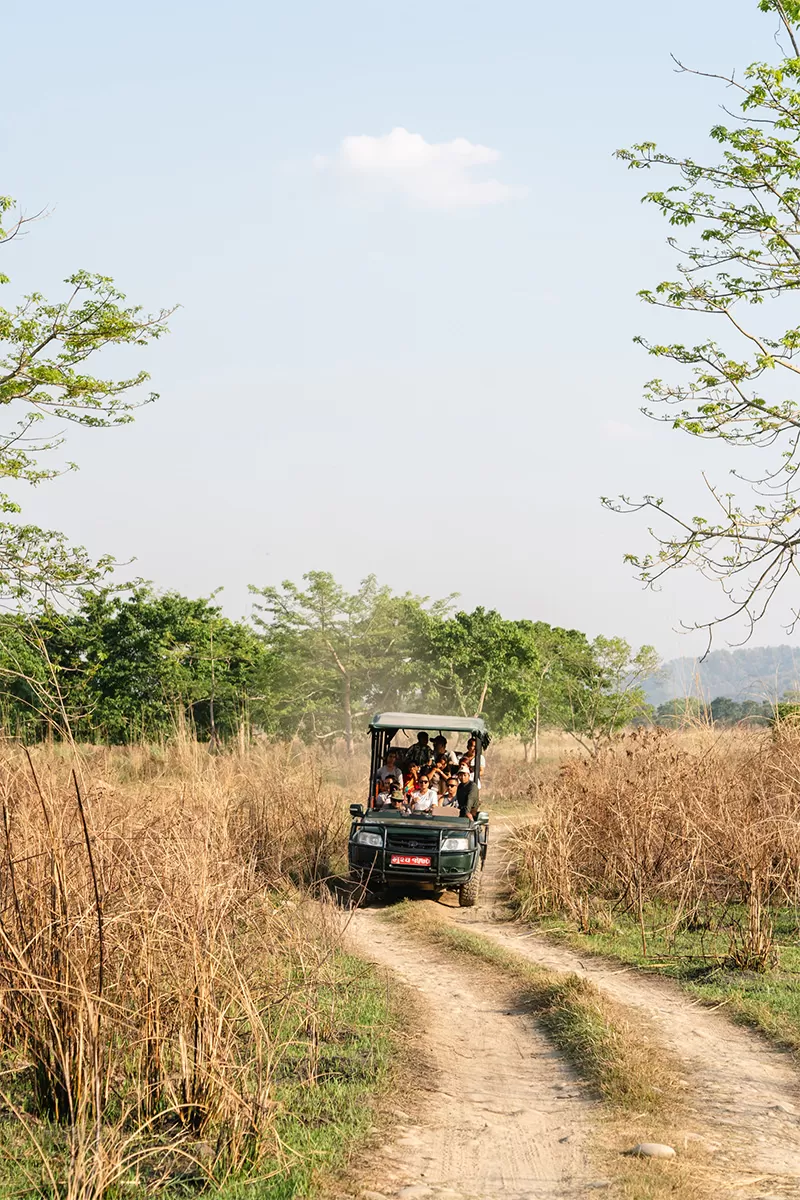
You will see hatchlings, juveniles in various size classes, and the breeding adults. Compared to the mugger crocodile, the gharial has a long narrow snout that looks almost prehistoric. The centre is on the main jeep safari route, so most full-day safaris stop here.
Different from the morning birdwatching canoe ride. A sunset canoe is slower, longer (90 minutes), and timed so you are mid-river when the sun drops behind the Mahabharat range. The river turns gold, kingfishers come in to roost, and on a still evening you can hear elephants moving in the forest on the far bank.
Cost: NPR 1,500 to 2,500 (USD 12 to 19) per person, often included in our extended-stay packages.
The Narayani is the bigger sister river to the Rapti and carries enough volume for legitimate kayaking and gentle rafting. Half-day trips from Bharatpur cover 15 to 20 km of class II water with bird-rich riverbanks, occasional rhino sightings from the boats, and a riverside lunch stop.
Best season: October to April. Avoid monsoon - the river runs dangerously high.
Cost: Approximately USD 35 to 60 per person for a half-day trip including transfers and lunch.
Few things in Chitwan beat a 6 AM yoga session on a wooden deck overlooking the Rapti, mist rising from the water, the calls of red junglefowl and the occasional rhino splash on the opposite bank. Most resorts on the river offer this - ours runs sessions in season with a visiting yoga instructor from Pokhara.
Duration: 60 minutes.
Tharu cuisine is unlike anything else in Nepal. It uses freshwater snails, river fish, wild greens, dhikri (rice flour dumplings), and ghonghi (river snail curry). A 2-hour cooking class in a local Tharu home - which is what we arrange for our guests - covers two to three dishes plus the meal you cooked.
Cost: USD 25 to 45 per person including ingredients and meal.
Several Chitwan resorts including ours operate working organic gardens that supply the kitchen. A guided 45-minute walk through the gardens covers Nepalese vegetable varieties you have never seen, herbal remedies the Tharu have used for centuries, and ends with a meal cooked from what you just walked past. Free for in-house guests at our resort.
After three days of jeep safaris and jungle walks, a Himalayan herbal massage hits differently. The better Chitwan resorts now offer full spa menus - Ayurvedic treatments, deep tissue massages, herbal steam baths. Our wellness centre uses oils and herbs sourced from a Pokhara-based Ayurveda producer.
Typical cost: USD 25 to 60 for a 60-minute treatment.
The flat lowland terrain around Patihani and Bachhauli is built for casual cycling. A 2 to 3 hour ride takes you through mustard fields (yellow in December), through three or four Tharu hamlets, past the gates of Bishazari Tal, and back along the Rapti riverbank. Bicycles are usually free for in-house guests.
Best season: October to March. April-May can be too hot for midday riding.
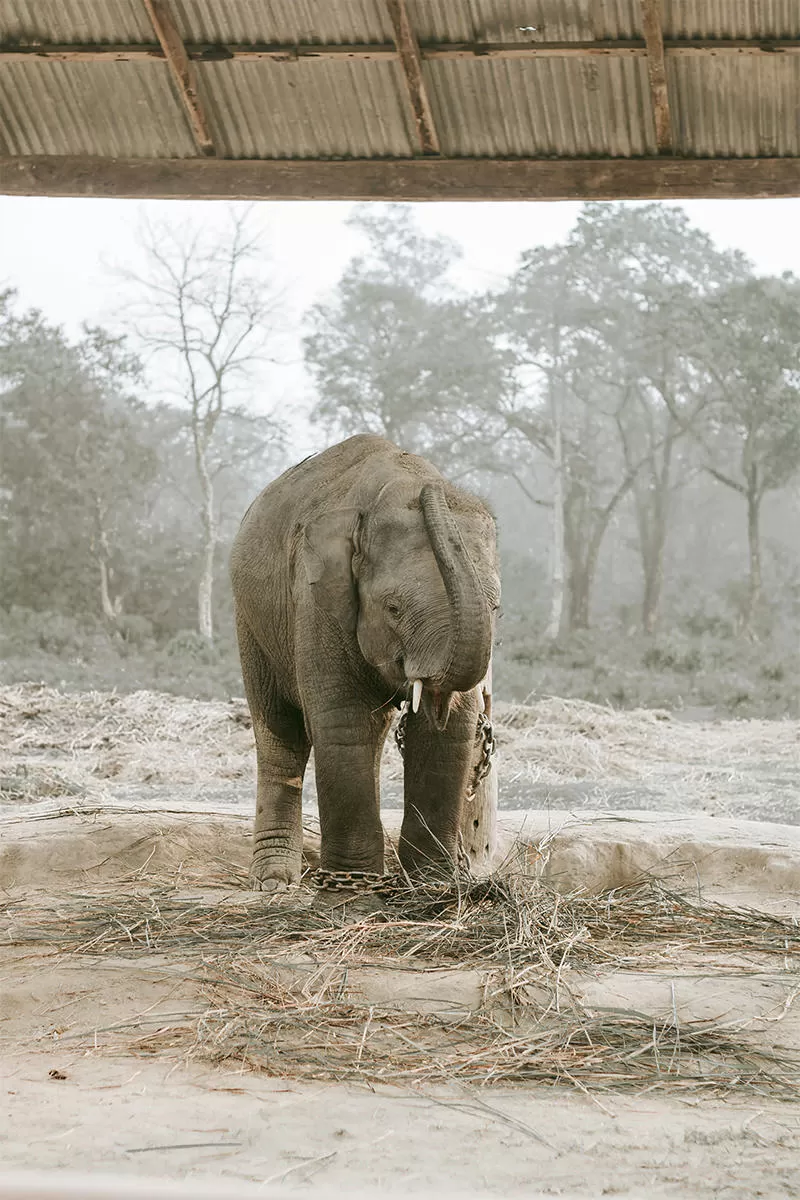
A note on ethics: We do not promote elephant riding. But several centres including the government Elephant Breeding Centre near Sauraha host morning elephant bathing sessions where the working elephants enter the Rapti for their daily wash. This is an observation experience - you watch the mahouts (handlers) and elephants from the bank. It is genuinely beautiful and there is no rider interaction required.
When: 7 AM to 10 AM, daily during the cooler months.
Hands-down the slowest, gentlest, and most photogenic transport in Chitwan. A wooden cart pulled by two bullocks, a Tharu farmer at the reins, taking you through dirt tracks and rice paddies at 4 km per hour. It is corny and it is also one of those experiences guests remember years later.
Duration: 1 hour.
Cost: NPR 800 to 1,500 (USD 6 to 12).
Where the Kali Gandaki and Trishuli rivers merge to form the Narayani, Devghat is one of the holiest pilgrimage sites in Nepal. Hindu pilgrims come here for last rites and the annual Maghe Sankranti festival. Even for non-religious visitors, it is an extraordinary cultural and photographic stop - ash-covered sadhus, the rivers, ancient temples, and a hilltop view if you climb the path.
Distance: Approximately 15 km from our resort. A 30 to 40 minute drive.
When: Year-round, but extraordinary during Maghe Sankranti in mid-January.
Use this table to plan what fits into your specific Chitwan stay.
| Stay Length | Day 1 | Day 2 | Day 3 | Day 4-5 |
|---|---|---|---|---|
| 2N / 3D | Arrival, Tharu village walk, cultural show | Morning canoe + jungle walk, afternoon jeep safari | Bird tour or Elephant Centre, depart | - |
| 3N / 4D | Arrival, Tharu village, cultural show | Full-day jeep safari | Bishazari Tal, sunset canoe, cooking class | Cycling or spa, then depart |
| 4N / 5D | Arrival, village + cultural show | Full-day jeep safari | Bishazari Tal birding, spa | Devghat day trip then sunrise yoga, depart |
River Bank Jungle Resort is in Patihani, Bharatpur-22, approximately 14 km from Bharatpur Airport (BHR) - a 30-minute drive. From Kathmandu, flights take 25 minutes (multiple daily on Buddha Air and Yeti Airlines). From Pokhara, flights take 35 minutes. Tourist bus from either city takes 5 to 6 hours.
Two nights is the bare minimum and covers only safari basics. Three nights adds room for Bishazari Lake, a cooking class, and proper relaxation. Four nights is the sweet spot - genuine cultural and wellness immersion alongside the wildlife. Five-plus nights suits photographers and slow travelers.
October through March is peak season - cool dry weather, excellent wildlife visibility, perfect for all of the activities in this guide. March-May has the best tiger sighting probability but afternoons are very hot. June through September is monsoon - lush, quiet, cheap, but several activities suspended.
Carry both Nepali rupees and USD. ATMs in Bharatpur (20 km away) work reliably; ATMs in Sauraha can be hit-or-miss. Most resorts including ours accept major credit cards but local guides and Tharu cultural performances are cash-only. Budget USD 15 to 30 per day in small cash for tips and incidentals.
The safari is the headline. But the gharial crocodiles at sunrise, the Tharu grandmother explaining how to fold a dhikri dumpling, the mist on the Rapti at 6 AM, the bullock cart rumbling through the mustard fields, the deep tissue massage after three days of jeep rides - this is what guests remember years later. The wildlife is the reason you book. These experiences are the reason you stay another night.
River Bank Jungle Resort is built for travelers who want both. Our location in Patihani gives you immediate access to the park for safaris, the Rapti River runs past our property for canoe and sunset experiences, our organic gardens and kitchen feed you farm-to-table, our spa runs daily, and our team will help you sequence the right mix of safari and slow-travel experiences for your specific dates.
Build your own Chitwan itinerary: Tell our team how many nights you have, what you most want to experience, and we will design a sequence of safaris and beyond-safari experiences that maximizes every day. Message us on WhatsApp or use the inquiry form on our booking page. River Bank Jungle Resort, Patihani, Bharatpur-22, Chitwan. On the river, on the park boundary, on the side of slow travel.