Chitwan Jungle Safari: The Complete 2026 Guide to Activities, Costs, and What to Expect
May, 17 2026
River Bank Jungle Resort
The best time to visit Chitwan National Park is from October to March, when cool, dry weather (15 to 25 degrees Celsius) makes wildlife viewing comfortable and water sources concentrate one-horned rhinos, deer, gharials, and over 540 bird species in predictable, easy-to-spot locations. For Bengal tiger sightings specifically, late February through April offers the highest success rate, as villagers cut the tall elephant grass in late January and animals gather around shrinking waterholes before the monsoon.
This complete month-by-month guide walks you through what to expect in every season at Chitwan National Park Nepal's first national park and a UNESCO World Heritage Site since 1984 so you can pick the perfect window for your jungle safari. As a riverside resort located directly on the banks of the Rapti River in Patihani, we have hosted thousands of guests across every season, and the patterns are remarkably consistent year after year.
Quick answer for travelers in a hurry: If you want comfort + wildlife + cultural festivals, book between mid-October and mid-December. If your goal is photographing tigers or rhinos at close range, target March and April. Avoid mid-June through early September unless you specifically want lush green landscapes and lower prices.
| Season | Months | Weather | Wildlife | Best For |
|---|---|---|---|---|
| Peak Winter | Oct - Dec | 15 to 25°C, dry | Excellent | First-time visitors, families |
| Late Winter | Jan - Feb | 10 to 22°C, cool mornings | Excellent | Birdwatchers, photographers |
| Hot Dry | Mar - May | 25 to 38°C, very dry | Outstanding | Tiger spotting, serious wildlife |
| Pre-Monsoon | Late May - Jun | 30 to 40°C, humid | Good | Budget travelers, fewer crowds |
| Monsoon | Jul - Aug | Heavy rain, 28 to 35°C | Limited | Photographers of lush landscapes |
| Post-Monsoon | Sep | Warm, drying out | Improving | Shoulder-season value seekers |
Chitwan sits in Nepal's subtropical Terai lowlands at roughly 400 meters elevation. Unlike the high Himalayas, Chitwan experiences a tropical monsoon climate that divides the year into four distinct wildlife windows. Understanding these windows is the difference between a safari that delivers and a safari spent staring at empty grass.
Winter is widely considered the best time to visit Chitwan National Park, and it is when our private plunge-pool villas book out fastest. Daytime temperatures sit comfortably between 15 and 25 degrees Celsius, mornings can drop close to freezing in January, and rainfall is almost zero. The grass is shorter, the foliage is thinner, and water sources are reduced which means animals move to predictable spots that experienced naturalists already know.
In late January, local Tharu communities harvest the towering elephant grass for thatch. Suddenly, swaths of the park that were impenetrable walls of green become open sightlines straight to the riverbanks. Rhino and tiger sightings spike dramatically in the two to three weeks after the grass cutting.
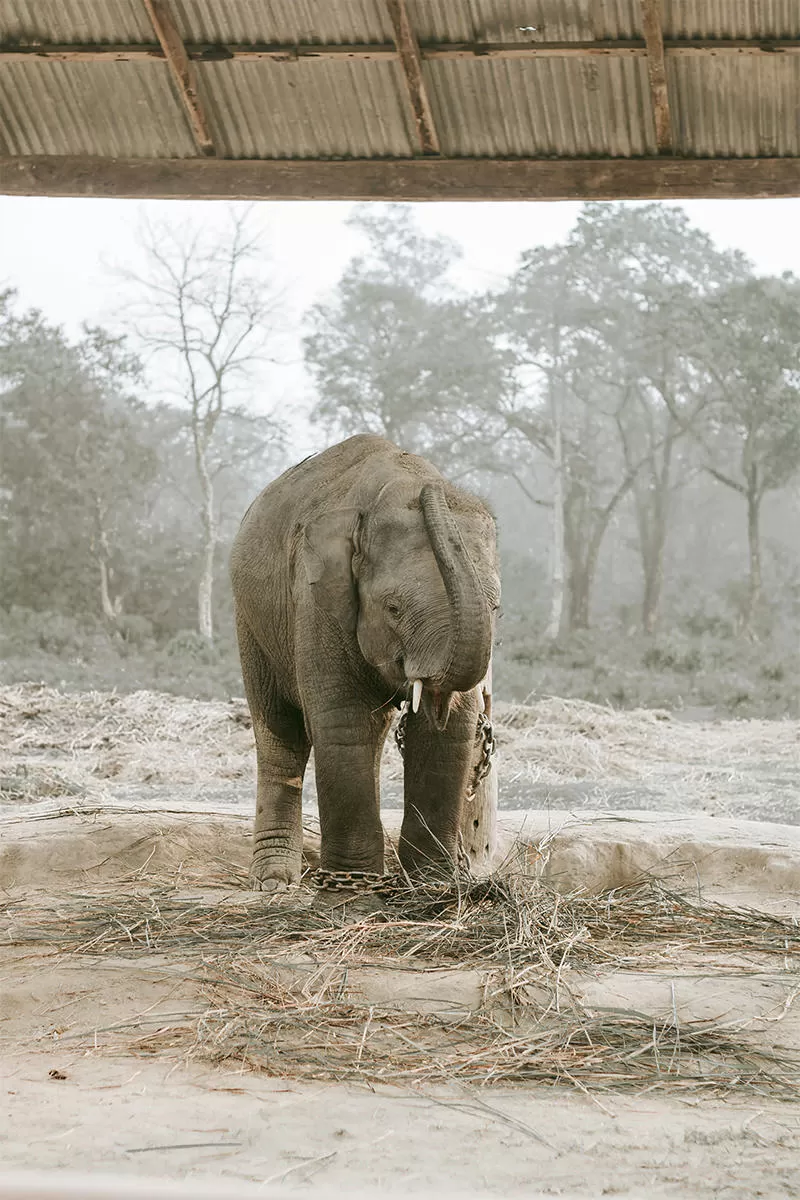
What you can expect to see in winter: One-horned rhinos at waterholes (95 percent sighting probability on a half-day jeep safari), spotted and sambar deer in herds, langur monkeys, wild boar, gharial and mugger crocodiles basking on Rapti riverbanks, and elephants. Bird diversity peaks in November and February as migratory species join 540-plus resident species this is the prime window for bar-headed geese, ruddy shelducks, sarus cranes, and the elusive Bengal florican.
If your reason for traveling to Chitwan is to photograph a Bengal tiger, this is your season. Of an estimated 130 to 140 tigers living in Chitwan National Park, the dry-heat months pull them out of the dense forest interior and toward the riverine waterholes and toward the safari jeeps.
Temperatures climb fast: March averages 25 to 32 degrees Celsius, May can hit 38 to 40 degrees Celsius. The trick is timing. Morning safaris depart at 6:30 AM when temperatures are still comfortable, and afternoon safaris start at 3 PM after the worst heat has passed. By 11 AM, you want to be back at the resort with a cold drink in the plunge pool, not in a jeep. This is also when our riverside lounge and shaded organic gardens are at their most appreciated.
March is arguably the single best month for wildlife. The grass is fully cleared, the cold of January is gone, the heat of May is not yet brutal, and animals are still active throughout the daylight hours. April adds wild rhododendron blooms in the surrounding hills. May delivers the absolute highest tiger sighting probability but demands genuine heat tolerance.
Mid-June through August brings 80 percent of Nepal's annual rainfall to Chitwan. The Rapti River swells, some park roads become impassable, the elephant grass shoots up to 26 feet (8 meters), and wildlife disperses into the dense undergrowth. We do not recommend Chitwan in July or August for first-time visitors who want to see big mammals.
That said, monsoon has a quiet, underrated appeal. The park is shockingly green, butterflies and reptiles are everywhere, room rates drop substantially, and you will often have the river to yourself. Birdlife remains active. If you are a landscape photographer or simply want a moody, atmospheric escape with very few other tourists, monsoon in Chitwan can be magical just adjust your expectations away from charismatic megafauna.
By mid-September the heaviest rains have stopped, the air is washed clear, and the park is starting to dry out. Late September and the first two weeks of October are a genuine sweet spot: green landscapes that still look like monsoon, but rapidly improving wildlife visibility, fewer tourists than peak winter, and shoulder-season pricing. This is when many of our returning guests prefer to come.
Use this table to match your travel dates to your priorities. Temperature ranges are typical daytime highs and overnight lows.
| Month | Temp (°C) | Rain | Wildlife Highlights | Crowd Level |
|---|---|---|---|---|
| January | 5 to 22 | Almost none | Cool foggy mornings, rhinos at waterholes, grass cutting starts late month | High |
| February | 8 to 25 | Almost none | Post-grass-cut visibility spike, migratory birds peak, tigers more active | High |
| March | 12 to 32 | Very low | Best all-round month, tigers emerging, full daylight wildlife activity | Moderate |
| April | 18 to 36 | Low | High tiger sighting rate, hot but manageable mornings | Moderate |
| May | 22 to 40 | Some pre-monsoon | Peak tiger sightings, intense heat by 11 AM | Low |
| June | 24 to 38 | Increasing | Monsoon arrives mid-month, animals harder to spot | Very Low |
| July | 25 to 35 | Heaviest | Park partially flooded, very lush, limited safaris | Very Low |
| August | 25 to 34 | Heavy | Similar to July, leeches on jungle walks | Very Low |
| September | 23 to 33 | Tapering | Green landscapes, wildlife returning to viewable areas | Low |
| October | 18 to 30 | Almost none | Peak season begins, excellent all-round conditions | High |
| November | 12 to 27 | None | Cool dry weather, migratory birds, prime safari month | Very High |
| December | 8 to 24 | None | Crisp mornings, mustard fields bloom yellow, photogenic | Very High |
Book between mid-October and mid-December. The weather is gentle, the wildlife is plentiful, your children will not melt in the heat, and the cultural calendar overlaps with Dashain and Tihar Nepal's two biggest festivals — so you can pair the safari with authentic celebrations in the nearby Tharu villages.
Target February through early April. The post-grass-cut visibility, the dry conditions, and the long daylight hours give you four to six prime shooting hours each day. Soft morning light at the Rapti River from late February is what wildlife photographers travel halfway around the world for. Our river-facing villas put you at the water at 5:45 AM with zero commute.
Plan for November or February. November brings the autumn migrants arriving from Tibet and Siberia; February brings species preparing to head north. Chitwan officially hosts over 540 species of birds, and the Beeshazar and Associated Lakes — a Ramsar wetland 7 km from our resort are extraordinary in these two months.
November to early March is ideal. Cool evenings on a private villa veranda, mist over the river at sunrise, bonfires after dinner. Avoid May heat and monsoon mosquitoes.
June and September deliver dramatic savings often 30 to 50 percent below peak rates with green-season scenery. Late September is the smarter pick of the two: rain is winding down and wildlife is returning.
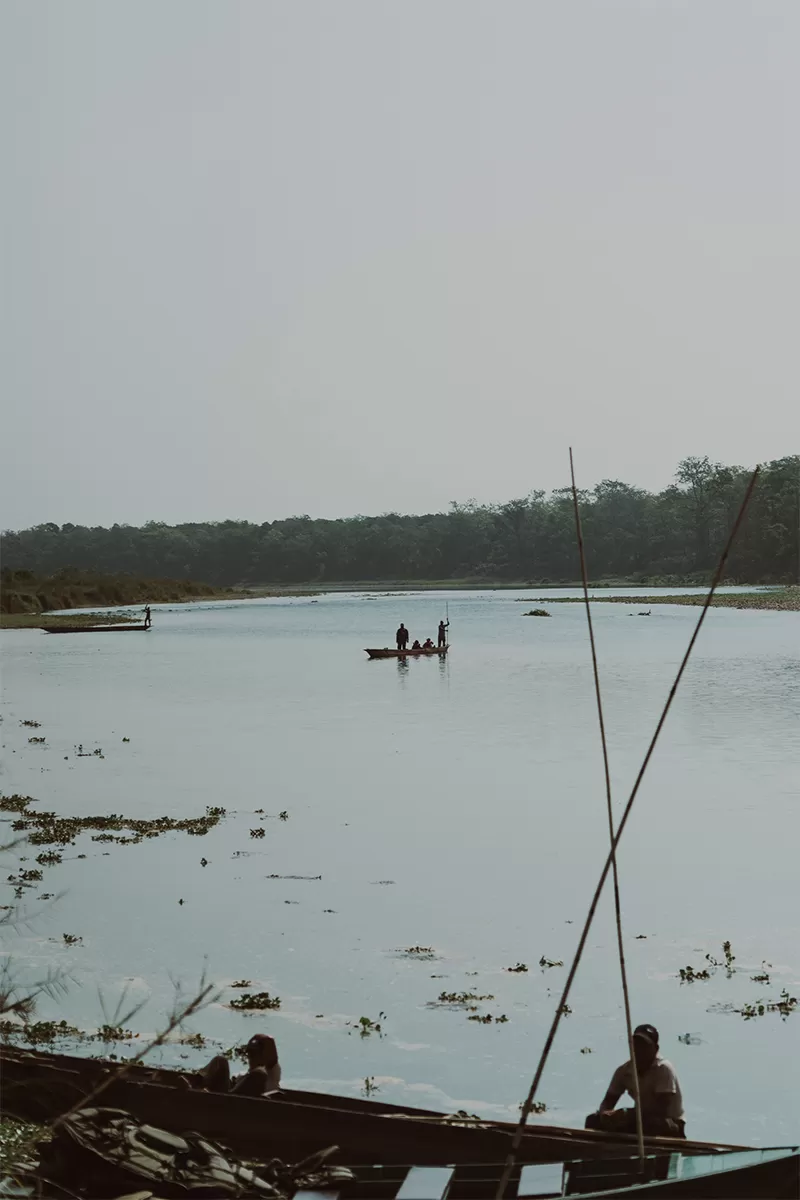
We built our resort on the Rapti River in Patihani specifically because location is the variable most travelers underestimate. Our property sits directly on the park boundary 14 to 18 kilometers (a 30-minute transfer) from Bharatpur Airport, which has multiple daily flights from Kathmandu (25 minutes) and Pokhara (35 minutes).
In winter, our heated rooms and bonfire pit handle the cold mornings. In the hot-dry season, the private plunge-pool villas and river breeze make midday tolerable. In monsoon, our covered verandas turn the rain into part of the experience rather than an obstacle. Year-round, the resort runs on organic farm-to-table cuisine grown on site, ethical jeep and canoe safaris led by senior naturalists, and authentic Tharu cultural evenings.
Choosing your dates is the single highest-leverage decision in planning a Chitwan trip. A morning in March will outperform a week in August for wildlife. A November evening on the Rapti River will give you the Nepal of postcards. And a January grass-cutting week will hand you visibility that no other month delivers.
Whichever window suits you, we can match it. Our team has guided guests through every Chitwan season for years from monsoon photographers to peak-winter honeymooners. If you want a personalized recommendation based on your specific travel dates and interests, message us on WhatsApp or use the inquiry form on our booking page.
Ready to plan your visit? Browse our seasonal safari packages, check live availability across our deluxe rooms, super deluxe rooms, and private plunge-pool villas, or contact our reservations team for a tailored itinerary. River Bank Jungle Resort, Patihani, Chitwan — on the Rapti River, on the park boundary, on the side of nature.