Chitwan Jungle Safari: The Complete 2026 Guide to Activities, Costs, and What to Expect
A Chitwan jungle safari is the wildlife centerpiece of any Nepal trip, combining jeep safaris, canoe rides on the Rapti River, guided jungle walks, bird watching, elephant breeding centre visits, and Tharu cultural performances across 952 square kilometres of UNESCO-protected forest.
A Chitwan jungle safari is the wildlife centerpiece of any Nepal trip, combining jeep safaris, canoe rides on the Rapti River, guided jungle walks, bird watching, elephant breeding centre visits, and Tharu cultural performances across 952 square kilometres of UNESCO-protected forest. A typical two-night, three-day safari from Kathmandu costs between USD 139 and USD 400 per person depending on accommodation tier, and packages include park permits, all safari activities, meals, and transfers. Chitwan National Park is home to roughly 130 to 140 Bengal tigers, more than 600 one-horned rhinoceroses, and over 540 bird species - one of the densest concentrations of charismatic wildlife in South Asia.
This guide is written by a riverside resort that runs safaris every single day. We will walk you through exactly what each activity involves, what it costs, what you will realistically see, what to wear, what to avoid, and how to structure your days for the highest wildlife-per-hour return. No fluff, no marketing speak - just the information that helps you book a safari that actually delivers.
Quick context: Chitwan National Park was established in 1973, named a UNESCO World Heritage Site in 1984, and covers 952.63 square kilometres of subtropical lowland in south-central Nepal. The park's headquarters is in Kasara; the main tourist entry points are Sauraha (east) and Patihani (west). River Bank Jungle Resort sits on the western Patihani side, directly on the Rapti River and on the park boundary - approximately 14 km from Bharatpur Airport.
The Six Core Chitwan Safari Activities
Unlike African safaris that happen almost entirely from a jeep, Chitwan uses multiple safari modalities - and good resorts assign you a naturalist who knows when to switch between them. Here is what is actually on offer.
1. Jeep Safari (The Workhorse)
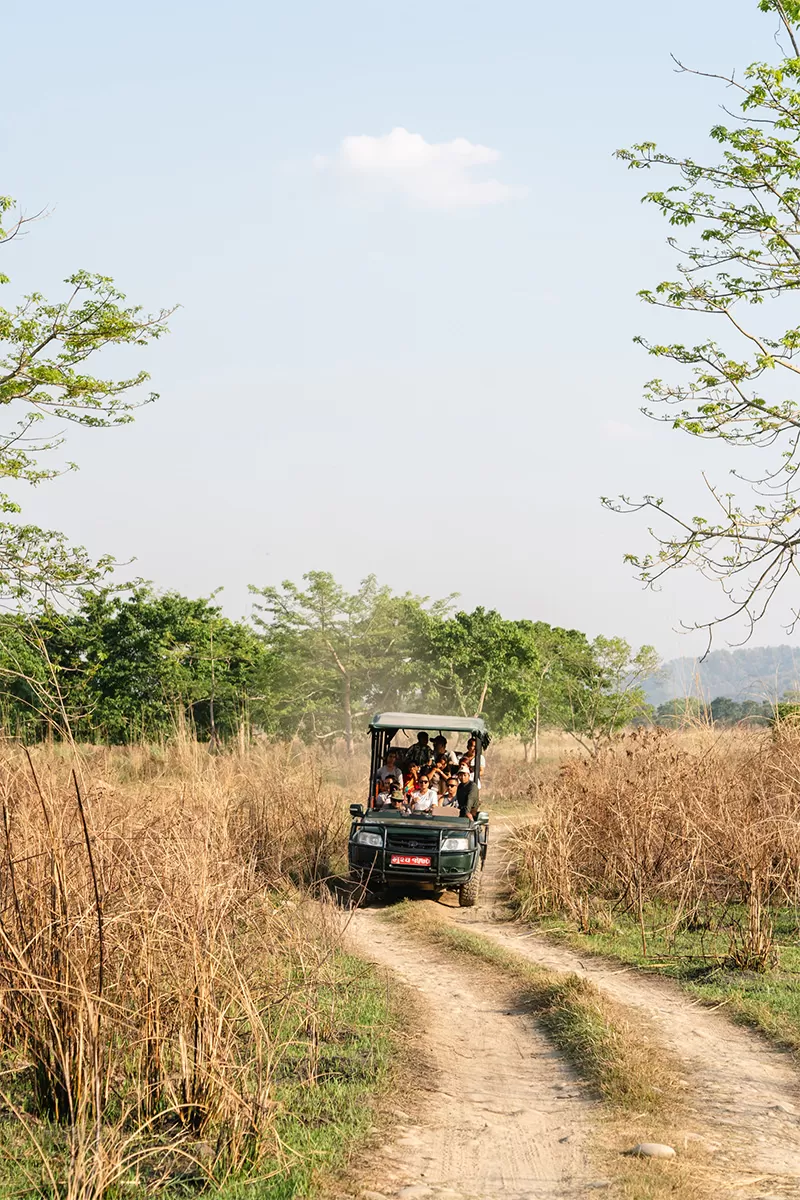
What it is: An open-top 4x4 vehicle carrying six to eight guests with a driver and a trained naturalist, covering 25 to 50 km of forest tracks across grasslands, sal forest, and river edges.
Duration: Half-day (4 to 5 hours) or full-day (8 to 9 hours with a packed lunch deep inside the park).
What you will see: One-horned rhinos (very high probability), spotted and sambar deer (certain), wild boar, langur and rhesus monkeys, peacocks, eagles, and during peak dry months - Bengal tigers. Crocodiles bask along the riverbanks.
Cost: Park entry fee is approximately NPR 2,260 (USD 17) for foreign visitors plus jeep hire of around NPR 7,000 to NPR 9,000 per vehicle. Both are typically bundled into resort safari packages.
Best for: First-time visitors, families, anyone who wants to cover ground. The full-day option is the single highest-yield wildlife experience in Chitwan.
2. Canoe Ride on the Rapti River
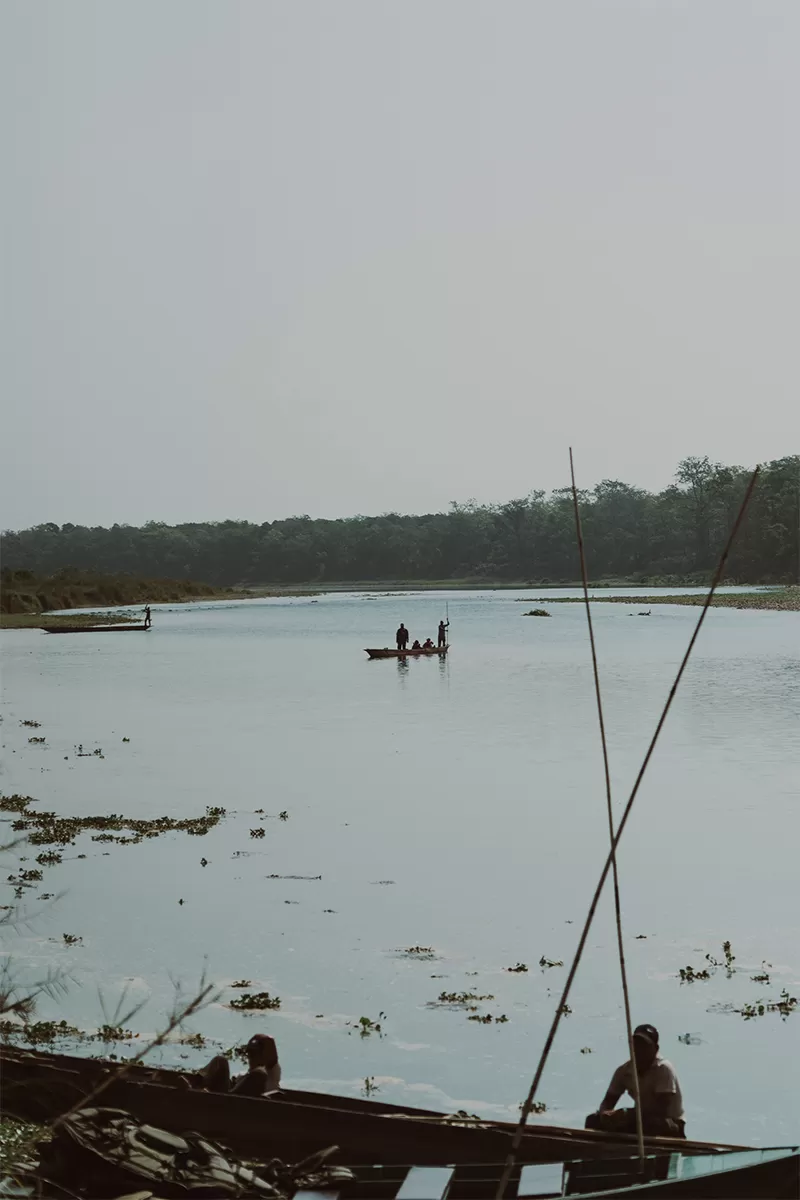
A slow, silent drift down the Rapti River in a traditional dugout canoe (carved from a single sal tree trunk). Two boatmen, six to eight passengers, no engine, no noise.
Duration: 45 minutes to 1 hour, typically starting just after sunrise when birds are most active.
What you will see: Gharial and mugger crocodiles sunbathing on sandbanks (Chitwan hosts one of the last viable wild gharial populations in the world), kingfishers, herons, storks, and the occasional rhino drinking at the water's edge. Bird density on the river is extraordinary - 50-plus species in an hour is routine.
Cost: Approximately NPR 1,200 to 1,800 (USD 9 to 14) per person, usually included in 2N/3D packages.
3. Guided Jungle Walk
This is what makes Chitwan special. Chitwan is one of the very few tiger reserves on earth that legally permits walking safaris. You walk with two licensed naturalists, each carrying a bamboo stick, no engine, no jeep - just you, the forest, and the alarm calls of langur monkeys and spotted deer signalling predator movement nearby.
Duration: 2 to 4 hours (half-day) or 6 to 8 hours (full-day with packed lunch).
What you learn: Reading fresh tracks, identifying scat, spotting tiger scratch marks on bark, recognising the alarm calls that signal predator presence. Birding is exceptional because you can stop, listen, and triangulate calls.
Important note: Jungle walks have an inherent risk - you are on foot in tiger and rhino habitat. Naturalists are trained for it, and incidents are extremely rare, but this is not a stroll in a botanical garden. The minimum age is typically 16 and a reasonable fitness level is required.
4. Bird Watching
Chitwan officially hosts over 540 species of birds, and the Beeshazar and Associated Lakes (a Ramsar Convention wetland 7 km from our resort) push that further. From the giant Lesser Adjutant Stork to the tiny Hodgson's bushchat, the range is staggering.
Best months: November and February when migratory species join the residents. Dedicated birding tours leave at 5:30 AM and run for 3 to 4 hours.
5. Tharu Cultural Village Tour and Stick Dance
The Tharu are the indigenous people of the Chitwan lowlands - the original 'people of the jungle' who lived in this malaria-infested forest for centuries before it was even safe for outsiders. Their mud-walled homes, agricultural practices, and stick dance traditions are still very much alive in the villages surrounding the park.
Most safari packages include a late-afternoon village walk and an evening Tharu Stick Dance performance - rhythmic, percussive, and genuinely entertaining. This is not a manufactured tourist show; it is a living tradition that the Tharu communities have shared for generations.
6. Elephant Breeding Centre Visit
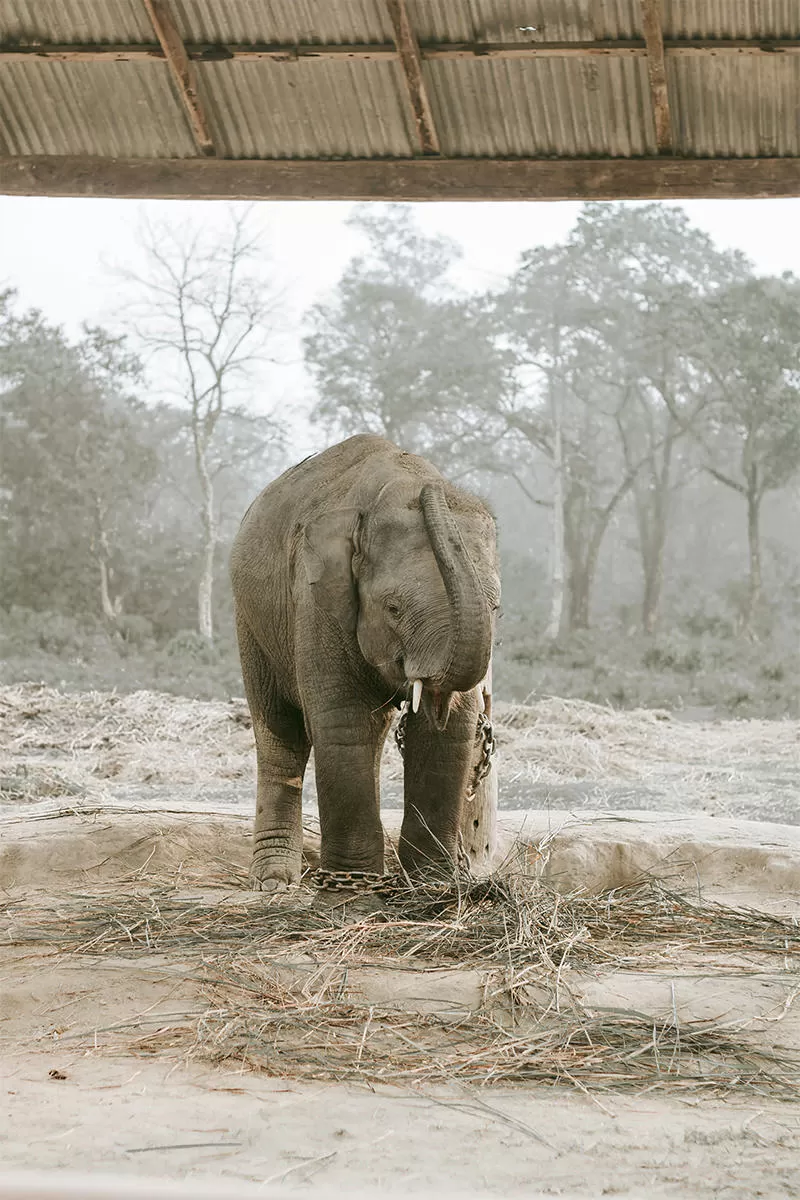
The Khorsor Elephant Breeding Centre near Sauraha is a government-run facility focused on captive breeding of Asian elephants. You will see calves, learn about the conservation programme, and observe the centre's work. This is an ethical alternative to riding elephants - a practice we and most reputable Chitwan operators no longer offer.
On elephant rides: Once a Chitwan staple, elephant-back safaris have been progressively phased out by ethical operators since 2018, following widespread concerns about animal welfare. River Bank Jungle Resort does not include or promote elephant-back safaris. Our wildlife packages use jeep safaris, canoe rides, and walking safaris exclusively. Elephant bathing experiences, when offered, focus on observation rather than rider-based interaction.
Chitwan Jungle Safari Costs and Packages (2026)
Pricing varies primarily by accommodation tier and trip length. The activities themselves are similar across the price spectrum - the difference is the room you sleep in, the food you eat, the guides assigned to you, and the size of your safari group.
Package Type
Duration
Approx. Cost (USD pp)
What's Included
Budget
1N / 2D
100 - 130
Basic lodge, 1 jeep safari, canoe, cultural show, meals
Standard
2N / 3D
150 - 250
Mid-range hotel, 2 safaris, canoe, jungle walk, Tharu dance, meals, transfers
Premium (us)
2N / 3D
280 - 450
5-star villa or super deluxe, private safari, naturalist, all activities, gourmet meals
Extended
3N / 4D
350 - 600
Full Chitwan experience with full-day safari, multiple activities, optional Beeshazari Lake visit
Honeymoon
3N / 4D
500 - 900
Plunge-pool villa, private dining, candlelight river dinner, couples spa
Note: Park permit fees (currently around NPR 2,260 for foreign tourists, NPR 1,130 for SAARC nationals, NPR 150 for Nepalis), 13 percent VAT, and government taxes are usually included in package quotes. Always confirm before booking.
What Drives the Price Difference
Location. River-facing rooms on the park boundary cost more but cut your safari commute to zero. Properties on the Sauraha main strip are cheaper but cost you time.
Group size. Shared safaris (6 to 10 people per jeep) are cheaper. Private safaris (one family, one naturalist) cost more but deliver dramatically more wildlife.
Naturalist seniority. Senior naturalists with 10-plus years of park experience know exactly where animals are at any given hour. Junior guides know less. The difference is night and day.
Vehicle type. Open-top 4x4s are standard. Some operators use closed minivans - avoid these for jungle safaris, the visibility is poor.
Sample 2 Night / 3 Day Chitwan Safari Itinerary
This is how most of our guests structure their stay. Activities slide slightly based on weather and season, but the rhythm holds.
Day 1: Arrival and Orientation
12:00 - 13:00: Arrive at the resort. Welcome drink and lunch.
14:00: Resort orientation, safari briefing, and check-in to your villa or deluxe room.
15:30 - 17:00: Tharu village walk and visit to a local Tharu home.
17:30 - 18:30: Sunset on the Rapti River from our riverside lounge.
19:00: Tharu Stick Dance cultural performance.
20:00: Dinner at our farm-to-table restaurant.
Day 2: The Main Wildlife Day
06:00: Tea and biscuits.
06:30 - 09:30: Canoe ride on the Rapti River followed by a guided jungle walk.
10:00: Hot breakfast back at the resort.
11:00 - 14:00: Free time - plunge pool, spa, organic garden tour, or yoga session.
14:30 - 18:00: Half-day jeep safari deep into the park.
18:30: Sundowner on the river deck.
20:00: Dinner.
Day 3: Final Morning and Departure
06:30 - 09:00: Birdwatching tour OR Elephant Breeding Centre visit.
09:30: Breakfast.
11:00: Check-out and transfer to Bharatpur Airport, Kathmandu, or Pokhara.
Getting to Chitwan National Park
From Kathmandu
By air: 25-minute flight Kathmandu to Bharatpur Airport (BHR). Several daily departures via Buddha Air and Yeti Airlines. From Bharatpur, our resort is a 30-minute drive (approximately 14 km). This is the recommended option.
By road: 5 to 6 hours by tourist bus or private vehicle via the Prithvi Highway and the Mugling-Narayangarh road. Scenic but long.
From Pokhara
By air: 35-minute flight to Bharatpur Airport. Limited daily frequency.
By road: 5 hours via the Prithvi Highway.
From India
The nearest border crossing is Birgunj-Raxaul (about 4 hours by road from the park). Many guests arriving from Bihar or Uttar Pradesh combine Chitwan with Lumbini (the birthplace of Buddha, 3.5 hours west).
What to Pack for a Chitwan Safari
Essentials (All Seasons)
Neutral-coloured clothes: olive, khaki, grey. AVOID bright colours and white - they spook wildlife.
Closed-toe walking shoes (not sandals) for jungle walks.
Wide-brim hat or cap.
Sunglasses and high-SPF sunscreen.
Insect repellent (DEET-based for April through September).
Reusable water bottle - we provide filtered refills.
Binoculars (10x42 is the sweet spot).
Camera with telephoto lens (200mm minimum, 400mm ideal).
Additional for Winter (October to February)
Fleece jacket or insulated mid-layer.
Windproof shell - safari jeeps move at speed and the morning wind chill is real.
Beanie or buff for early morning safaris.
Gloves are useful in January.
Additional for Summer (April to June)
Lightweight long-sleeve shirts (sun and insect protection).
Quick-dry trousers.
Electrolyte tablets - the heat is real.
Insider Tips for a Successful Chitwan Safari
Book a private safari if you can afford it. A shared jeep with eight strangers cannot stop for the specific bird you want to photograph. A private jeep with your family and a naturalist can spend 20 minutes watching a sloth bear without anyone complaining.
Do the morning safari, not the afternoon one, if you only do one. Wildlife is most active at dawn. The difference in sightings between a 6:30 AM start and a 3 PM start is dramatic, especially March through May.
Stay quiet. The single biggest predictor of wildlife sightings is jeep noise level. If you talk loudly, you push animals deeper into the forest. Whisper or stay silent.
Tip your naturalist. Senior naturalists in Chitwan typically earn NPR 1,500 to 3,000 per safari from the resort. A tip of USD 10 to 20 per safari for excellent service is appreciated and helps retain talent in conservation.
Ask for a senior naturalist by name. Our team rotates assignments, but you can request a specific guide based on previous guest feedback. Our reservations team will arrange it.
Two nights minimum, three nights if possible. One night is enough to say you came. Two nights gives you proper safari time. Three nights is when the experience starts to feel like a real wildlife trip.
Frequently Asked Questions
How much does a Chitwan jungle safari cost in 2026?
A 2-night, 3-day Chitwan safari package typically costs between USD 139 and USD 250 per person at standard mid-range resorts, and USD 280 to USD 450 per person at premium 5-star jungle lodges. Costs include park permits, all activities, accommodation, meals, and transfers. Budget single-night options start around USD 100, while extended private-villa stays can reach USD 600 per person for three nights.
Can you see tigers in Chitwan?
Yes. Chitwan National Park hosts an estimated 130 to 140 Bengal tigers - one of the densest tiger populations in South Asia. Sighting probability is highest from March through May when the grass is short and animals concentrate around waterholes. Realistic odds: roughly 10 to 15 percent per safari in October, climbing to 35 to 50 percent on multi-safari visits in March and April.
What is the difference between Sauraha and Patihani?
Sauraha is the busier, more developed eastern entry point with a strip of budget-to-mid-range hotels and restaurants. Patihani is the quieter western entry point, closer to Bharatpur Airport, with higher-end resorts directly on the Rapti River and on the park boundary. Wildlife access is comparable - the paths of Patihani and Sauraha lead into the same park - but Patihani is dramatically less crowded.
Is Chitwan safe for children?
Yes, with sensible precautions. Jeep safaris, canoe rides, the Elephant Breeding Centre, and cultural performances are family-friendly. The guided jungle walk has age and fitness restrictions (typically 16-plus) due to the on-foot wildlife encounters. Our resort welcomes children of all ages and has family-sized rooms and villas.
Do I need a permit to enter Chitwan National Park?
Yes. Foreign nationals pay approximately NPR 2,260 per day, SAARC nationals NPR 1,130, and Nepalis NPR 150. These permits are arranged by your resort or tour operator and are normally included in safari packages. Bring your passport for verification at the park gate.
How fit do I need to be for a Chitwan safari?
Jeep safaris and canoe rides require no fitness at all - sitting capacity is all you need. Jungle walks require a moderate fitness level: you will be on uneven ground for 2 to 4 hours and may need to walk quickly if wildlife is encountered. Birdwatching tours are gentle.
Are there ATM and Wi-Fi facilities in Chitwan?
Bharatpur city (20 km from our resort) has multiple ATMs and full banking facilities. Within the resort, Wi-Fi is free across rooms and public areas. Mobile signal is reliable on Ncell and NTC networks throughout the park boundary but weaker deep inside the forest.
Can I combine Chitwan with Pokhara and Kathmandu?
Yes, this is the classic Nepal itinerary. The standard route is Kathmandu (2 to 3 nights) - Chitwan (2 to 3 nights) - Pokhara (2 to 3 nights) - Kathmandu. We arrange transfers and recommend flights for Kathmandu-Bharatpur and Bharatpur-Pokhara to save 5 hours of road time each leg.
Booking Your Chitwan Jungle Safari
A well-planned Chitwan safari is one of the most rewarding wildlife experiences in South Asia. The key is matching your travel dates to your priorities, picking a property on the park boundary rather than in a town strip, choosing experienced naturalists, and giving yourself at least two nights to let the rhythm of the jungle settle in.
At River Bank Jungle Resort we run safaris every single day in every season. Our naturalists are park veterans, our jeeps are open-top 4x4s with proper sightlines, our canoes hold no more than eight guests, and our private plunge-pool villas give you somewhere to retreat between adventures. The river runs past the property and the park starts at our garden gate.
Ready to book your safari? View our full safari packages with current prices, browse rooms and villas, or message our reservations team directly on WhatsApp for a tailored itinerary that matches your dates and interests. River Bank Jungle Resort, Patihani, Bharatpur-22, Chitwan. Where the jungle starts at your doorstep.